Monday, 4 November 2013

issues of representation and building a relationship with a subject

Based on reading of Documenting the documentary, by Micheal Rabiger:
"Documentary representation, in trying to control mass perception of the truth, is really a bid for political influence." Often documentaries adhere, unintentionally, back on traditional norms "power of the universal, mythic and fetishistic"
"Documentaries are a construct, and reveal as much about their maker as their subject". Things to think about- rights, violations and veracity (publics right to know, protecting a subject from itself/the world etc) politics and control and form, authorship (how much voice you might want to put in it)

Some reviews of relationship/subject documentary films:
As the founder of Kartemquin Films in Chicago in 1966, Gordon Quinn has many years of experience with documentary production. Known for tough, issue-driven documentaries, Kartemquin is particularly devoted to fostering, as it states on its website, "the growth of emerging filmmaking voices passionate about social issues and media policy." Asked about the balance of power between filmmaker and audience, Quinn notes he makes a point of trying to give the viewer a sense of how the story is being told and what the filmmakers' relationship with the subject is like.
For Kartemquin's recent film In the Family, about predicting breast and ovarian cancer and how women live with the risk, director Joanna Rudnick was having a difficult time finding  a woman who shared the BRCA gene that she had. She felt that the most effective way of building trust with her subjects was to share her own story on camera with them, which enables viewers to see how that relationship between filmmaker and subjects evolves over time.
Quinn recently completed Prisoner of Her Past, a film about a childhood Holocaust survivor who is suffering from Late Onset Post Traumatic Stress Disorder, obviously a topic requiring sensitive and delicate handling. While he had permission from her son, the legal guardian, Quinn wanted her permission as well. She was ambivalent, and Quinn captures that in an interesting way. She had said on camera that she would not give permission. Nevertheless, she allowed filming and at several points addresses the camera directly. In a painful and fraught scene where she meets a Polish cousin from childhood, she refuses to acknowledge him and asks him to leave the room. Then she turns to the camera on Quinn's shoulder and says, "Excuse me, I am talking to this gentleman," referring to the filmmaker. In the last shot of the film, she turns to the camera and says, "Goodnight, ladies and gentlemen," before heading off to her room.  Quinn kept these scenes in the film to give the audience a clear sense of her character and his relationship with her.
Director Liz Mermin had a different set of concerns with her recent film, Team Qatar, about five high school students from Qatar training for the World Debate Championship in Washington, DC. In order to establish trust with the kids, she spent a lot of time talking with them off-camera, explaining the film and answering questions about herself, and she made it clear that anytime they wanted her to stop filming she would do so. "That didn't mean I didn't try to get them to change their minds," Mermin explains. "Sometimes I would explain why I thought it was important to the story, and they'd decide it was okay, but sometimes they were adamant and I wouldn't push because I didn't want to hurt them. Even if I thought they were being silly, there was a possibility I didn't know what they were up against at home, and it would run the risk of destroying our relationship, or ruining the film."
Dealing with cultural sensitivities and the safety of these kids after the film was completed was perhaps the most challenging issue for Mermin. A key scene occurs when the Qatar kids, particularly religious Muslim girls, react to the London Gay Pride parade, which provokes an intense debate. Mermin needed to balance what would work well for the film with concerns for her subjects in the long term. "Would we get the girls in trouble with conservative friends and family by showing that they were at the event at all?" she reflects. "Would we hurt them in the future by showing their uninformed homophobic reactions? I had to walk a line conveying their feelings and their work coming to terms with what they'd seen without keeping them on record forever with ignorant or bigoted views. That was about very careful editing. A very complicated emotional and cultural clash had to be reduced to a four-minute scene, and that's never easy."
Another tricky situation occurred when the Qatar kids came to Washington for the final competition. They got to meet students from Latin America and Israel, went out for ice cream and hung around in their hotel rooms. Mermin decided not to shoot this despite its potential interest. "The presence of the camera would have made it artificial," she notes. "The kids from Qatar trusted us and didn't care, but the other kids didn't know us, didn't want cameras in their personal time and didn't want to be extras in someone else's film."
Mermin strives to observe, listen and provoke thoughts and questions without telling anyone what to think. She aims to "create the feeling of being there, where there is a world they wouldn't otherwise know. If audiences come away with vastly differing opinions, arguing about what they've seen, I feel I've done my job well."


These are quite interesting ways to look at how you might interact with subjects and people. These are both examples of how people might try and show subjects as they wished to be shown, and also in an artistic way too. There seems to be quite a thin line between give and take- be too sensitive to try and make people seem like how they think they appear, and also how they appear to the camera person. This seems to be quite a sensitive line; people often will see themselves in a good, or at least positive light, while the photographer has to tread around the obvious troubles (which are usually what makes the person an interesting subject) As with Diane Arbus, you could be crude, call them freaks- or you could do as the photographer above, with the debate children. There is an obvious questioning about how these kids were raised and the parents, though o course the participants and schools want the subjects to appear as best as they can. 
There is also the question about art/reality which I find interesting. If you are Hertzog, you just talk and talk and what is artistic is your vision of the world, however biased and wrong it is. This is very hard to pull of without sounding pretentious and arrogant (Hertzog barely manages it) Other documentary film makers are much quieter, they hang and watch and let you make your own decisions. 
I will have to be very careful about how I shoot the photos, and deicde a style- i want the people to have a voice, but I also want it to be artistic and to not be a sentimental reflection of whatever the subjects want to say. 

Wednesday, 30 October 2013

A cool photographer

I was searching through photographers for fun the other day and I came across this guy, who i really like- Hossein Zare. He does some very cool landscapes portraits which are really bleak and beautiful, but also generally have quite strange elements in them, for instance:


The photo by itself (the one on its side) is already melancholy and weird, as it is so faded, and the tight rope between it is like a line between realities. I liked the surreal feel to this, because it takes a photo which might seem normal (a city-scape) and then flips it on it's head in a very subtle and understated way. When I saw the picture first (small), I thought it was a man tight roping between buildings. This could comment on how each building is its own world, as well as how we fail to imagine a parallel universe that is any different to ours; we literally are stuck in this structure. Many of his photographs are the same;


They all have a very simple aesthetic, very based on line and color and using this simplicity to transform the normal to the abnormal. The one above I liked because It leads the eye right back, and has almost a story-book quality to it. It doesn't real. On top of this, the footprints are the wrong way around, suggesting the more surreal nature of the photo. This is very photo-shopped; all this shadows have been taken out, making it feel story book.


I really like this one above, especially because it shows a simple and effective use of photo-shop, which isn't over the top. I also liked how he crossed normal boundaries in quite a subtle and understated fashion. This one I liked especially because he chose a business man (someone who you might not expect to be on a swing, or in a fantasy) to be on the swing. This grounds the reality, as the chains links him and earth, he links this weird fantasy to what we know. I liked this because it turns our ideas upside down literally.

The photographer is from Iran, and is self taught. He likes to "create an ominous atmosphere", and to "defy gravity", which make a sort of apocalyptic feel. This has little to do with my project, but I liked it a lot.


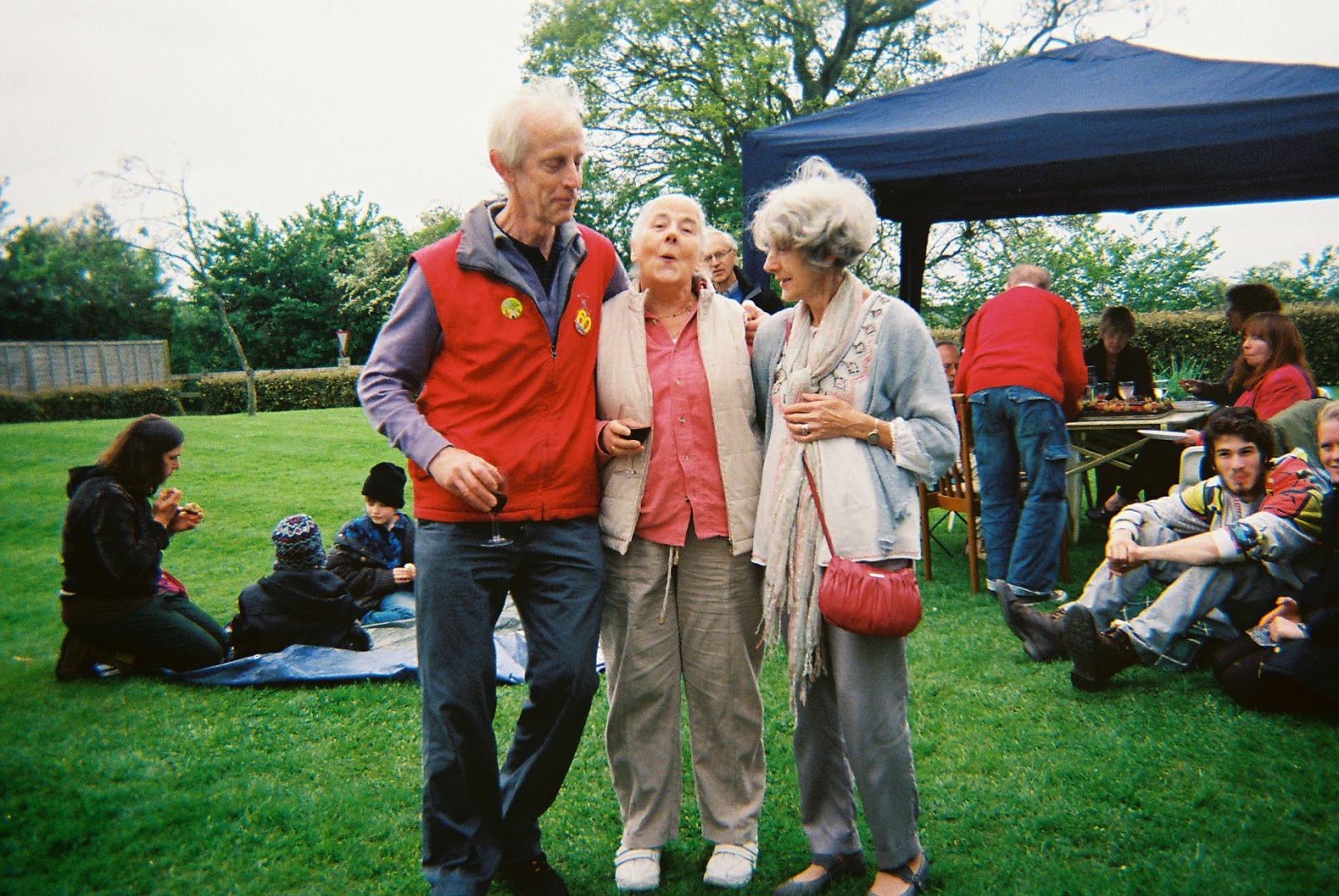
On this note, was going through some old photos, and found some photos my aunt took at my dads birthday party. I'll put them here before explaining why I find them interesting.


I think I liked these because they showed what was important to her. She had only 20 photos, and so she had to make sure that she didn't over-shoot. I took about 700 photos that day, some which look almost identical to these ones. However, it is these ones which I think of as the best ones. This is beacuse of the way they look, i thin. The grainy, gritty, contrast-y image speaks volumes on the photos which define y childhood. These photos are a representation, to me, of history, of before- they suggest someone who actually thought and cared for images and took these ones. This is interesting, and relates to previous readings about how highly we hold analogue photography and the style of analogue photography. i want my project to reflect this; these are disposable images in name, but actually they are interestingly held in high regard. The photos taken by the group can reflect this; that by looking the way they do, and by being finite, this makes each one worthy and count. I was wondering if this project does not work, about maybe giving my cameras to lots of people and seeing what their reactions are to being asked to photograph what is important/themsleves.
I wonder if then showing such photos to the public, if they would get the same feeling that I get from looking at these. I feel that this is an important attitude to photography. It also links into what we decide is "worth" a photograph and what isn't. This is a whole other question; and links especially to what we decide is important and beautiful. My aunt decided it was all our relatives, but I wonder what homeless people, or just random people might think instead. This leads me to new avenues! 


Tuesday, 29 October 2013

New Ideas

I have emailed a large number of people, including several community groups I have worked with before- which shows that contacts are very useful. I have had several tentative replies, so we'll have to see which ones are a definite.
Since then, I have had a new idea about gallery space. What I would love to do, id put all of the little photos in bottles, (with a spring on, so they come out) and then have a little light box so people can see them. There would be a massive pile of bottles with photos in, and people have the chance to pick up a bottle and see for themselves how the photos are. I liked this idea because it relates to the letter in a bottle- you throw it out, and hope someone will pick it up and read it, and treasure it- but you have no idea who. I liked this for both the kids (as this is a kid thing to do) and for the homeless, as this relates to waste, and hopeful hopelessness. Its also relatively cheap to make, whereas telescopes are hard to buy and it's illegal to put photos on the street.


I also have been contacting quite a few disabled people charities and schools. I have done huge amounts of community art work with most of these (Oska Bright, Isis Academy, etc ect) I feel like this would also be an interesting and "voiceless" group to document. We will see who might be interested/answer.

I have also come across a lovely photo documentary site online. The site shows photos (usually one) and has a voice over and soundscape, with someone essaying or talking about their experience, and things relating to the photo. I loved this as a style, because  it made you really look at this one photo, and the more the person spoke, the more life the photo gets, until you understand it right from the perspective of the person talking. I really liked that these two elements worked together to make the photo mean something different from what you thought, and exactly what the person who took it meant; this is really powerful and interesting. I liked that you get your first impression and then the actual meaning; they contrast nicely, showing what you expect and don't expect. This is pretty simple to make- it is just a lot of films- so I think I might try and copy this style for my own. Here is my favorite example of work:

http://cowbird.com/story/608/1000_Words/

Monday, 28 October 2013

Photography journals

I have been reading a journal, and notice that all reviews on photographers have similar aspects:

They start with the main theme, and then move onto a sum up of context, then have a quote from the photographer with mention to previous work, and then analysis. It usually finishes with where it's being shown.
Many of the projects follow this style, for instance the one in the "British journal of photography", which interviews Diane Smyth on her project "Farmers." The review starts off with a theme introduction- the fashion shoot idea of people versus "real people", and then goes on to talk about context, which in this case is her previous fashion photography. Then it interviews her, asking her why this is an important project, where it came from etc. It then talks about method and analysis of the photos, and then ends with future work and where to see this one. I liked this as a way to quickly sum up a project and anchor it in its historical/cultural place, so when we see the next 5 double-page spreads, we understand their ideas.

Longer written articles might focus deeply on history or cultural influences, or might include an interview with a photographer. One i liked was by Sam Taylor wood, who shot a project called "First Film", the interview signals to us many of the ideas above but in the voice of the artists which is nice, as you can understand why they made creative style choices in their own voice.
there are also short reviews, which slid over the deeper theory and ideas behind the photographs and focus on the more visual aspects. I noticed that more online reviews do this, even within the same journal. They focus more on the more obvious style, and on how to find out more or see previous work- it's much more brief.

I was thinking about my own intro- I might try and imitate (in a way) these types of writing. I would therefore do this:

1) One or two sentence summing up main theme
2) method
3) Context
4) In depth look at various shades of the theme- theory and influential artists
5) Conclusion

This seems to be the most obvious way to do it, and the most popular with the other photographer writers.

Next stage

My next stage... to identify which group i am going to document.

I specifically want to document homeless or children. I have been researching places in Brighton or nearby which might be interested in helping. As i have, I realize (perhaps obviously) that getting people to participate is going to be difficult, as these groups are protected by CRB and the like. It will be hard to convince organisations to let an outsider in, and to take the photos, and put them on the internet. especially as I am a 3rd year. I'm not sure how long it will take to get an answer, but hopefully they will be OK with it, I am just making my introductory email really nice.

For instance:
dear Sir/Madam,
My name is Robyn Furtado, I am a photographer, and I am very interested in
the representation of homeless people in the news. I always make a point
of
talking to people on the street, and find them interesting and often
traumatic people, but find they are stigmatized in society, with exception
to the Big Issue. As a photographer, I have come up with an idea to try
and
change these attitudes. 
Therefore, I would like to make a photo project in which I would give
people on the street disposable cameras, and let them document themselves
and the lives they live. These could then be put in a gallery, or online,
or in the big issue as a case study on homeless lives within the UK, from
their own perspectives, with some written accounts/stories to follow. I
feel this might give more exposure to homeless people and give them a
voice, as the Big Issue does.
I was writing to see whether the you at the Big Issue have any thoughts
about this idea; if you think it would work,or how might be best to go
about this,or if you would like to collaborate on the project. I think
this
would be a good chance for more exposure for homeless issues.
Thank you for your time, I hope to hear from you soon,
Robyn Furtado

i have also been considering the first hand in (after christmas) I am going to ask a group of teenagers to document their christmas's. This could reflect family life and different versions/cultures etc could reflect each other, and could comment on what we think we should take photos of/family etc? I have access to these people and could write a lot on the subject, relating it to the bigger project. This seems like a good idea.

Presentation done!

I did my presentation and 750 word essay, which i'll put below. This is the link for the presentation, i used prozei, which i don't really get, but it looks pretty cool:

http://prezi.com/gg7tp5xncxp4/photography-proposal/

The presentation went well, I actually managed to finish in time (5 minutes) and get through most stuff. I felt as through I covered quite a few projects which had inspired me, and a lot of these were independent research, and were multi-media, so felt this was good, as it covered a wide basis of ideas. I also backed this up with several theorists, most of which were independent- i used quite a few also. However, I also feel that I didn't do as well as I could have. For one thing, as i was nervous and wanted to get it finished, I rushed what I was saying. I felt that i spoke very very fast and might not have been understood. I also felt that my presentation did not go into depth enough in how theorists and projects linked. This was partly because of the time limit, but it was also partly because I tried to fit huge amounts in. I need to hone down my ideas so I have time to explain them properly and link the presentation. However, I did feel that the overall presentation worked in giving a brief start to what my idea might be.

this is my essay:
“Photography is never neutral” (Tagg, 1998, 63) and this makes it a “highly complex” issue. When we take a photo, as objective as is intended, it will always “represent the view of someone.” (Sontang, 2003, 16) To further this, if no photo can be objective, then when we take a photo, we are accessing pre-determined ideologies based on culture and hegemony, and will take photos in a certain way, the way we expect them- or society expects them- to look. Foucault argues that photography is an “expansion of the state”, and that documentary photography is a “means of evidence” with an “authority to arrest, picture and transform daily life.” (Tagg, 1998, 65) If we are to believe that a photo is ‘true’, and if we are to photograph something as culture determines us to, this suggests that we only document things in the way that society dictates, which is a worrying idea.

These issues of who controls representation and the complexities of representation are central to my proposal. Initially, I was inspired by photography projects like “The 100”(Knight, 2012-3) and “Beautiful Horizons”,(2012) which gave cameras to a selection of people, and let them document themselves. In the latter project, the group of people who were given cameras were street children from Rio, a group of people who have been continually represented in a victimized and bad light by western photographers. The project, which spanned 17 years, gave the children a voice and chance to create their own reality. This could be seen to be a “purer” or more “truthful” account of reality than somebody imposing their view onto the street children.

However, as the project progressed, I also became aware of further fields of investigation that the project could lead to. As Zuckerman suggests, the internet and cheap technology are the “great leveller”- we all have the chance to recreate our realities and share them online, and get others to engage in them. Interactive Medias, such as online documentaries and found photography, suggest communities can use technology to make their own realities. The online Hawaiian documentary, “Kupuna” (Hasen, 2012) for example, made by the Hawaiians in an online, interactive format to “document their fading history”- shows a community using technology to create an online space to keep their history alive; this suggests that representation is evolving for the better with new technology. However, I was also at the same time struck by similar projects- Miska Henner’s found photography and Juliet Ferguson’s “Stolen Images”, (2011) which suggested that online photography and internet sharing was “an expansion of state”- the culmination of a “surveillance society” or “society of control”,(Deleuze, 1992, 105) in which society is constantly watched, and how we engage with the world and understand representations is based on which company has most power or  money; suggesting that the internet is controlled by dominant hegemonies- therefore, interactive media was only serving the ideologies of a few. These two contrasts of online representation interested me.

From this research, I decided to make a project to challenge these ideas. I propose to give disposable cameras to a group of people-preferably people who are traditionally voiceless- and let them represent themselves. I have been in contact with several such groups- for instance a young people’s homeless charity and local school. I would then like to collect the photos taken and create an interactive online documentary, which can be accessed by all. To further this, they would also be displayed in a gallery at the degree show- though the structure of the gallery and online website will depend on the group of people. If I am to choose homeless people, I would create an online documentary narrative with interview and sound elements, and I wouldn’t show any work in the gallery, it would be in the street, where it could be accessible by everyone. If, however, I choose children as a group, then the online space will be more like a mood board for each child, with found imagery suggesting notable spaces and objects alongside the photos-to try and represent childhood’s sensory reality- and then in a gallery setting, will have the photos only allowed to be seen down a telescope, (or similar) suggesting a voyeuristic approach onto someone else’s reality. Each display of the chosen group would reflect their idea of their own reality and the photos they have chosen; space is important to each group of people, and I would build a gallery or web-doc to reflect this.


With this project, I hope to not only give some people the chance to create their own reality and representation, but also to see how people use this power, to see if they create a reality which surprises the hegemonic norms and “appropriates the real.” This would be done by the participants using photography to create their world from their own perspective, and by using the internet to re-create it and engage with a community. I hope by using this interactive technique, the project will advocate a space where people have taken control of their own representation, instead of being represented by the hegemonic media controllers through which much photography is produced.

Thursday, 17 October 2013

Reading and preparation for presentation

I have a presentation on thursday in which we have to talk about our ideas. I have been collecting a lot of reading and previous projects. Its only 5 minutes and I have a lot to say, so not sure how to cut down all my research. I have also done some more reading, which i'll write here:

Susan Sontang: Regarding the pain of others

"To remember, more and more, is not to recall but to be able to call up a picture"
"photographs have the advantage of uniting two contradictory features. Their credentials of objectivity was inbuilt. They always had a point of view. They were real and they were witness to the real. An objective record and a personal testimony"
When a photo is "less serviced", it gets more "compassion and belief" because people see it as not engineered. In the same strand, "photography is the only major art form that does not give advantage to those who are trained and experienced."
"photographs objectify. They turn an event or a person into something that can be possessed... and this is prized as a transparent account of reality"
COLLECTIVE MEMORY "photographs that everyone recognizes are now a constituent part of society that everyone chooses to think about" "collective memory- that THIS is important, this is how it happened etc... ideologies create sustaining archives of images, representative images, which encapsulate common ideas of significance and trigger predictable thoughts."
"It is felt that there is something morally wrong with the reality of photography"

John Tagg: The Burden of Representation

"The indexical nature of a photograph is highly complex, irreversible and can guarantee nothing at the level of meaning" "Photography is a new and specific reality, it is not a magical enamtion but a material product of a material apparatus set to work in specific contexts by specific forces""Photography is the reality of present discussions and meanings" (even old photos are judged in par with present day ideology)
--> The legal side of photography- who OWNS the photograph? If you take a photo of reality, do you own that space? Do you own what is shown? Do you own a space of time? The real second of captured space? Law has "appropriated the real"= photos are owned by a photographer, but if you are IN the photo, you are then given to the photographer, used by them- is this fair? an "imprint of personality""the camera is never neutral"
--> "photography is a mode of capitalist expansion"- a means of control? (Control societies) "photography is a means of evidence" "it arrives on the scene with a sense of authority to transform, picture and arrest daily life. This power is not the power of the camera but the power of the state which supplies it" -- suggests that we always take a photo in terms of state control and state bias. This links to ideas about surveillance society. The camera to control representation, to document and record and watch, photography as propaganda. photography is used to do this- and to understand this, we must look at photos, at "what they do and don't do, encompass or exclude, resist or include, "-READ.
"photography has a currency. Marx saw that this currency could take force as compulsory action of teh state" "photographs are an essential ingredient to many social rituals. It is difficult to imagine these rituals before photography. It is difficult precisely because the internal stability of society is preserved through the naturalization of beliefs which are historically produced and historically specific. it is through this light we must see photographs" "It is an apparatus of ideological control under the central harmonizing authority of the class which has state power"

For my presentation:
I was thinking of basing my presentation with mainly ideas and theories about representation and the ethics of taking a photo (as above,)
However, I was also thinking about including theories about online representation (if its changed) and if we have more freedom on the internet to change our representation. This could include found photography and fears of control society, and would link by interactive media (as my project is interactive, and self-documenting)
I am writing at the moment.